Nature Knows and Psionic Success
God provides
Physicists create device for imitating biological memory
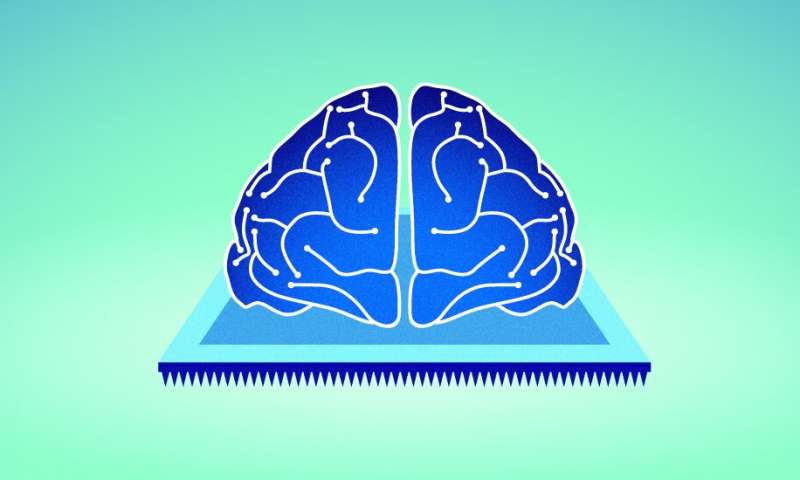
On-chip brain. Credit: Elena Khavina/MIPT Researchers from the Moscow Institute of Physics and Technology have created a device that acts like a synapse in the living brain, storing information and gradually forgetting it when not accessed for a long time. Known as a second-order memristor, the new device is based on hafnium oxide and offers prospects for designing analog neurocomputers imitating the way a biological brain learns. The findings are reported in ACS Applied Materials & Interfaces . Neurocomputers, which enable artificial intelligence, emulate brain function. Brains store data in the form of synapses, a network of connections between neurons. Most neurocomputers have a conventional digital architecture and use mathematical models to invoke virtual neurons and synapses. Alternatively, an actual on-chip electronic component could stand for each neuron and synapse in the network. This so-called analog approach has the potential to speed up computations drastically and reduce energy costs. The core component of a hypothetical analog neurocomputer is the memristor . The word is a portmanteau of "memory" and "resistor," which pretty much sums up what it is: a memory cell acting as a resistor. Loosely speaking, high resistance encodes a zero, and low resistance encodes a one. This is analogous to how a synapse conducts a signal between two neurons (one), while the absence of a synapse results in no signal, a zero. But there is a catch: In an actual brain, the active synapses tend to strengthen over time, while the opposite is true for inactive ones. This phenomenon, known as synaptic plasticity, is one of the foundations of natural learning and memory. It explains the biology of cramming for an exam and why our seldom-accessed memories fade. Proposed in 2015, the second-order memristor is an attempt to reproduce natural memory, complete with synaptic plasticity. The first […]
Recognizing National Breastfeeding Awareness Month

By: Liz Miller, RN, IBCLC, Certified Lactation Consultant, Tallahassee Memorial HealthCare August marks National Breastfeeding Awareness Month, an initiative to promote, protect and support breastfeeding by women in our community and across the world. One of the most personal decisions a mother can make surrounding the arrival of her little one is how to feed her new baby. At Tallahassee Memorial HealthCare (TMH), our goal is to equip every mom with the information she needs to make that important decision for herself and her baby and, in turn, to respect whatever that decision may be. As the region’s only accredited Baby-Friendly Hospital, we employ evidence-based practices to help mom and baby bond and to promote safe feeding. In supporting expecting and new mothers both in and out of the hospital, we also educate women on the benefits of breastfeeding, working with them on an individual basis to help promote the evidence-based practice as an option. The Benefits of Breastmilk The American Academy of Pediatrics recommends breastfeeding as the sole source of nutrition for infants for at least the first four to six months of life. While the act of breastfeeding provides invaluable bonding time for mom and baby, breastmilk itself has measurable benefits for both baby and mom. When available, human milk provides all of the nutrition a baby needs to grow and develop, including protein, fats, vitamins, minerals, enzymes and carbohydrates. Benefits of breastmilk for babies include: Building baby’s immune system and preventing infection and inflammation Promoting optimal development of the brain, which is especially important for premature infants Being more easily digestible Potentially lowering the risk of SIDS (sudden infant death syndrome) Benefits of breastfeeding for mom include: Lowering a mother’s risk of developing breast and ovarian cancer Releasing the hormone oxytocin, which helps the uterus return […]
Exercise could be the antidote to aging that Americans seek

Author: Jeannette E. Warnert There’s something magical about exercise. It impacts the body in many different ways, and all of them are good. Exercise burns calories, improves cardiovascular health, tones muscles, boosts mood, and now scientists are learning that it also thwarts one of the most-feared symptoms of aging, memory loss. Researchers at UC Irvine are conducting a 15-site national study on the effects of aerobic exercise on adults with mild memory problems. They are hoping to document evidence that will allow physicians to write prescriptions for exercise. “Exercise is medicine,” said James Hicks, director of UC Irvine’s Center for Exercise Medicine and Sport Sciences. To date, no effective drug therapies to treat dementia have been found. “Since 2002, 420 clinical trials on drugs targeted for Alzheimer’s have been launched. All of them failed,” Hicks said. “No drug will change its trajectory. But physical activity might.” Another UC Irvine professor, Carl Cotman, agrees. “That concept has exploded. That’s where the future is: understanding how exercise alters disease trajectories and improves outcomes,” Cotman said. Cotman’s research showed that exercise increases production of a substance called brain-derived neurotrophic factor, which aides in learning and memory and facilitates connections among nerve cells. It’s so critical to brain function that it has been dubbed “Miracle-Gro for the brain.” “Exercise builds brain health,” Cotman said. “It makes you more efficient. You’re thinking cleaner. It introduces a state of readiness.” UC ANR educators encourage Californians to exercise While scientists study the impact of exercise at the molecular level, UC Agriculture and Natural Resources nutrition educators continue to emphasize the importance of physical activity when they teach youth and families ways to improve their lives with healthy eating and movement. UC ANR’s Expanded Food and Nutrition Education Program (EFNEP) is offered in 24 counties in California. […]
Five ways that music really can transform your life

It’s not unthinkable that we’ll get to a point where doctors prescribe different kinds of music for a variety of conditions In one study, volunteers listening to instrumental, beat-driven tracks experienced more deep sleep ANYONE who’s ever been dumped by a boyfriend then sat in their teenage bedroom playing I Will Survive at full blast can attest to the healing power of music. But research is taking music’s curative properties to whole new levels – you can now buy tracks specifically designed to help you concentrate, sleep, even soothe a headache or control chronic pain. "We are only just beginning to tap into the vast therapeutic power of music, which research shows causes more areas of the brain to light up [when scanned] than any other activity," says Lyz Cooper, founder of The British Academy of Sound Therapy. Research is ongoing, but we know that different frequencies of music tell the brain to do certain things. For example, a high-frequency sound, such as an alarm or scream, will trigger the release of adrenaline, the hormone that prepares you for action. "A low-pitched sound, like a deep voice or bass drum, relaxes you," adds Cooper. "That’s because our brain detects a lower frequency as a slower sound wave, which can actually slow down the brain itself." "There’s a phenomenal surge of research into this at the moment, although we don’t yet know exactly which frequency has what effect, so it pays to be wary of some of the wilder claims," says Cooper, who is also a therapeutic music researcher and author of What Is Sound Healing? (Watkins, £7.99). However, it’s not unthinkable that we’ll get to a point where doctors prescribe different kinds of music for a variety of conditions and we’ll have playlists for every ailment or mood. "I […]
Physicists Create Device for Imitating Biological Memory
Researchers from the Moscow Institute of Physics and Technology have created a device that acts like a synapse in the living brain, storing information and gradually forgetting it when not accessed for a long time. Known as a second-order memristor, the new device is based on hafnium oxide and offers prospects for designing analog neurocomputers imitating the way a biological brain learns. The findings are reported in ACS Applied Materials & Interfaces . Neurocomputers, which enable artificial intelligence, emulate the way the brain works. It stores data in the form of synapses, a network of connections between the nerve cells, or neurons. Most neurocomputers have a conventional digital architecture and use mathematical models to invoke virtual neurons and synapses. Alternatively, an actual on-chip electronic component could stand for each neuron and synapse in the network. This so-called analog approach has the potential to drastically speed up computations and reduce energy costs. The core component of a hypothetical analog neurocomputer is the memristor. The word is a portmanteau of “memory” and “resistor,” which pretty much sums up what it is: a memory cell acting as a resistor. Loosely speaking, a high resistance encodes a zero, and a low resistance encodes a one. This is analogous to how a synapse conducts a signal between two neurons (one), while the absence of a synapse results in no signal, a zero. But there is a catch: In an actual brain, the active synapses tend to strengthen over time, while the opposite is true for inactive ones. This phenomenon known as synaptic plasticity is one of the foundations of natural learning and memory. It explains the biology of cramming for an exam and why our seldom accessed memories fade. Proposed in 2015, the second-order memristor is an attempt to reproduce natural memory, complete with […]
Do you have an oak tree in your yard? Every prepper needs at least one

( Natural News ) When choosing a list of plants to cultivate on your homestead, don’t forget about trees that can also function as a steady source of food or firewood. Consider oak trees, which provide acorns and bark that have many benefits. (h/t to UrbanSurvivalSite.com ) The survival uses of oak trees Oak is a hardwood that burns long and hot. As a resilient species, oak trees are naturally resistant to various diseases. Oak trees produce acorns that can be used to make food and ingredients like acorn butter and flour. Acorns are high in calories and they’re also a great source of protein. (Related: Start today: Plant these food-producing trees on your property now .) Oak logs are often used as a construction material for cabinets, flooring, trim, and furniture. There are various varieties of oak that offer different benefits. For example, red oak is one of the best sources of wood for furniture and flooring. Meanwhile, white oak is a great choice for firewood. Acorns as a survival food Some people avoid using acorns as an ingredient because the nuts have tannins. This group of bitter plant compounds can be harmful when consumed in high amounts. Additionally, tannins are considered an antinutrient, which means they can reduce the body’s ability to absorb essential nutrients from food. Fortunately, you can leach most of the tannins out of acorns when you prepare them for consumption via boiling or soaking. Once they’re properly leached, acorns can be roasted, salted, or sugared and consumed as a snack. With a food processor, you can turn roasted acorns into a nut butter. Acorn butter has a texture and taste similar to peanut butter, but the latter has a more pronounced, nut-like taste. Mother Nature’s micronutrient secret : Organic Broccoli Sprout Capsules now […]
MIPT physicists create device for imitating biological memory
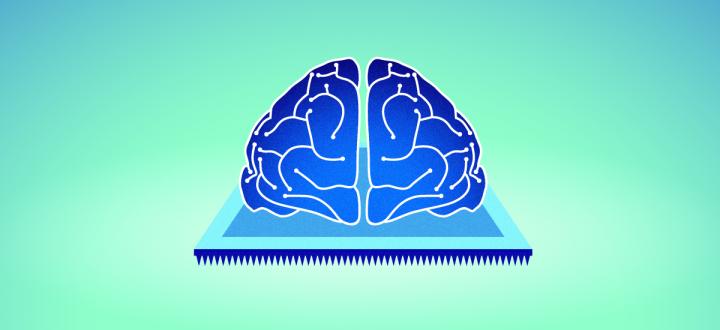
IMAGE: On-chip brain. view more Researchers from the Moscow Institute of Physics and Technology have created a device that acts like a synapse in the living brain, storing information and gradually forgetting it when not accessed for a long time. Known as a second-order memristor, the new device is based on hafnium oxide and offers prospects for designing analog neurocomputers imitating the way a biological brain learns. The findings are reported in ACS Applied Materials & Interfaces . Neurocomputers, which enable artificial intelligence, emulate the way the brain works. It stores data in the form of synapses, a network of connections between the nerve cells, or neurons. Most neurocomputers have a conventional digital architecture and use mathematical models to invoke virtual neurons and synapses. Alternatively, an actual on-chip electronic component could stand for each neuron and synapse in the network. This so-called analog approach has the potential to drastically speed up computations and reduce energy costs. The core component of a hypothetical analog neurocomputer is the memristor. The word is a portmanteau of "memory" and "resistor," which pretty much sums up what it is: a memory cell acting as a resistor. Loosely speaking, a high resistance encodes a zero, and a low resistance encodes a one. This is analogous to how a synapse conducts a signal between two neurons (one), while the absence of a synapse results in no signal, a zero. But there is a catch: In an actual brain, the active synapses tend to strengthen over time, while the opposite is true for inactive ones. This phenomenon known as synaptic plasticity is one of the foundations of natural learning and memory. It explains the biology of cramming for an exam and why our seldom accessed memories fade. Proposed in 2015, the second-order memristor is an attempt to […]
Artificial synapse mimics human memory
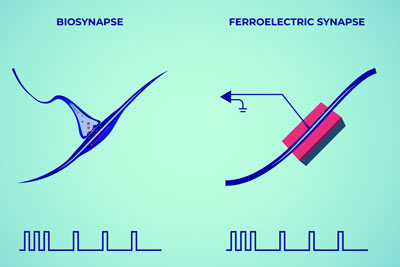
( Nanowerk News ) Researchers from the Moscow Institute of Physics and Technology have created a device that acts like a synapse in the living brain, storing information and gradually forgetting it when not accessed for a long time. Known as a second-order memristor , the new device is based on hafnium oxide and offers prospects for designing analog neurocomputers imitating the way a biological brain learns. Neurocomputers, which enable artificial intelligence, emulate the way the brain works. It stores data in the form of synapses, a network of connections between the nerve cells, or neurons. Most neurocomputers have a conventional digital architecture and use mathematical models to invoke virtual neurons and synapses. Alternatively, an actual on-chip electronic component could stand for each neuron and synapse in the network. This so-called analog approach has the potential to drastically speed up computations and reduce energy costs. The core component of a hypothetical analog neurocomputer is the memristor. The word is a portmanteau of “memory” and “resistor,” which pretty much sums up what it is: a memory cell acting as a resistor. Loosely speaking, a high resistance encodes a zero, and a low resistance encodes a one. This is analogous to how a synapse conducts a signal between two neurons (one), while the absence of a synapse results in no signal, a zero. But there is a catch: In an actual brain, the active synapses tend to strengthen over time, while the opposite is true for inactive ones. This phenomenon known as synaptic plasticity is one of the foundations of natural learning and memory. It explains the biology of cramming for an exam and why our seldom accessed memories fade. Proposed in 2015, the second-order memristor is an attempt to reproduce natural memory, complete with synaptic plasticity. The first mechanism for […]
Exercise Your Way To A Better Brain

By Blake Alec Miranda, Clinical Research Coordinator, YASSALAB Mood disorders like depression, anxiety and chronic stress can cripple your daily life, and spell disaster for your health. You or one of your family or friends may be directly affected, like one in five people in the USA, about 20% of the US’ entire population will be diagnosed with a mood disorder over the course of their lives, according to surveys by the National Institute of Mental Health (NIMH). Many different approaches can help you lead a happier, healthier life — even though these disorders are serious and potentially life-threatening. Cognitive-behavioral therapies with a counsellor plus medication have been standard. A new form of treatment with fewer side-effects which works immediately has delivered promising results recently, though. Exercise has been shown to reduce the effects of depression and anxiety and protect against cognitive decline. It can even improve your ability to handle high-stress events, such as life transitions, physical injury and workplace stress. First, we need to understand what we’re dealing with when we talk about mood and exercise. The neuroscience of physical fitness is an exciting, rapidly developing research topic that is set to change the way we treat mood disorders. What do you do when your body is unhealthy? You might take medicine, go to physical therapy, and try any and all remedies to alleviate the pain, depending on the circumstance. Eventually, you will feel better, stop treatment, and go about your life until the next time you’re feeling ill. It’s a simple story, and one that you’re all too familiar with if you’ve ever been to the doctor for any reason at all. But how about when your brain is “unhealthy”? When we’re depressed, anxious or chronically stressed, especially when pharmaceutical interventions can come with a multitude […]
11 Ways to Stay Awake in Class

Get some fresh air Schedule sleep Light up your day Share on Pinterest Nodding off in class is common for students of any age. Late nights studying, long hours on a job, sitting in a warm classroom after a big lunch, a long evening class, or simply finding the teacher or subject matter a trifle boring all can contribute to classroom sleepiness. For tips on how to stay awake in class or in any setting that requires your attention, consider the following strategies. While this may not be easy or appropriate in the middle of a lecture, walking around, jogging in place, doing jumping jacks, or any activity that gets your blood pumping can juice up your energy and attention levels. If you’re in a long lecture that has a break in the middle, use that time to get up from your seat and move your body. And if there’s no formal break, ask to use the restroom and get a little exercise on the way there and back. You can also try some chair stretches like shoulder rolls, seated twist, and others. If you’ve ever seen a new parent pushing a stroller on the sidewalk with an infant aboard, they may be doing more than simply getting out of the house for a few minutes. Being out in fresh air is invigorating. And if you’re stuck in a classroom or other indoor setting, taking a few deep breaths can help deliver a little more oxygen to your system. That might be just what you need to stay awake and attentive. Downing a cup or two of coffee, tea, or other caffeinated beverage can be a simple but effective jolt to your senses. But how much caffeine do you need to be alert? Well, it varies from person to […]
Indian Superfoods: 10 Reasons Why Indian Curry Is The Healthiest Preparation You Can Come Across

Indian curry is made with a diverse mix of vegetables and spices Have you ever wondered about the wonder that the Indian curry is? Made with a blend of onion, ginger, garlic, tomatoes and an array of spices, the Indian curry is the essence of every dish included in the cuisine. Highlighting the wisdom and glory of the great Indian curry is lifestyle coach Luke Coutinho. In one of his recent live sessions on Facebook, he talks about the nutrient dense Indian curry, which can act as a natural ailment. With spices like turmeric, black pepper, red pepper, cardamom, cumin, coriander and much more, the Indian curry can definitely contribute to good health. Keep reading to know how… Indian curry: top health benefits that will leave you surprised 1. You can add beans, lentils, vegetables, chicken, paneer or tofu to Indian curry. The base preparation of it is highly nutritious and adding vegetables to it can help in giving you a more balanced diet. You can add pulses to your curries to make it rich in protein and more nutritious Photo Credit: iStock Also read: Forget Avocado And Quinoa. Rujuta Diwekar Tells What Foods Are The Real Superfoods 2. The curry base be made either with water, cow milk, coconut milk or any other base of your choice. Each of these are going to add protein and fat to your diet. 3. You can also prefer adding cruciferous vegetables like cabbage, cauliflower, broccoli, kale and Brussels sprouts. Cruciferous vegetables come with a great deal of antioxidant benefits that can provide protection from harmful toxins in the body. 4. If you prepare curry with a generous blend of spices, it can help in releasing digestive enzymes that can break down food, thus ease digestion. 5. A curry made with these […]
Nootropics: Natural Supplements to Boost Brain Power
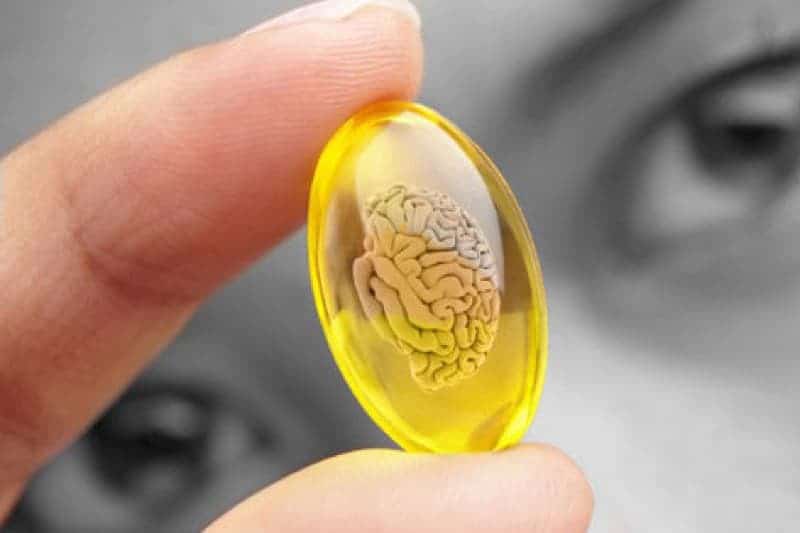
According to science, there are many minerals, vitamins, and herbs available that form an essential compound and acts as an activator for the brain functions. However, the question arises, is it true? Are these supplements effective enough that will help to enhance brain functionality? Are there any side effects of these pills? These are open questions that are not answered straight forward. There may be many factors that may affect the consumption of these pills. You can come across many options of brain boosters in the market. Recently a product came into highlight due to its effectiveness, ‘Alpha Brain.’ These pills are beneficial and have shown promised results. If you are wondering from where you can get authentic Onnit Alpha Brain supplement you can look at Top Brain Enhancements online store. You can find variety of brain boosters there. However, Alpha brain is highly recommended with true effects. Company manufacturing Alpha Brain, Onnit Labs knows this and offers a killer 100% money back guarantee. How These Pills Optimizes You The brain works as a storage device and maintains full body functionality. All our work depends on how active our mind is. People take supplements to increase their strength, but what about the brain. How can we optimize our brain and enhance its functionality? In this case, such nootropic helps to improve your thinking ability, works on your focus, and increases mental speed. These nootropics are a great source of many herbs that triggers every part of the brain. It will affect them in a manner that it works faster than usual. Are these Supplements Useful? According to an associate of Complementary and alternative medicine master’s program, it is said that these supplement pills are reliable and are useful to cure Alzheimer’s. You may feel changes in your mental function, […]
Quick tips for boosting your confidence during your next business presentation

Shutterstock Even the most confident individuals can feel nervous when giving a high-stakes business presentation. I’m not talking about leading your weekly sales team meeting. I’m talking about the yearly investor relations meeting, the keynote address, the big pitch to the potential client who will take your business to the next level, or the board of directors meeting you have to nail. In these make-or-break situations, it’s natural to feel less than confident. Obviously, you want your content to be spot-on and your talk (or script, outline, or PowerPoint deck) well crafted. But if you’ve made it to this point and think you’re 100% done, think again. Even after getting the content where you want it, you’re only 70% prepared at best. What’s next? How can you boost your confidence and achieve the results you want? The following seven tips will help take your business presentation to the next level. 1. Practice out loud The No. 1 rule to follow when it comes to preparing a powerhouse presentation is to practice or read your talk out loud. No matter how well it sounds as you read it to yourself silently, when you practice out loud, you will hear it from a different perspective. I frequently suggest practicing in the shower, while driving or when doing a routine chore. Yes, even if it feels odd to practice in an empty room or in front of the mirror, saying it out loud is crucial. Did you know that on average it takes reading out loud a minimum of three times to finalize your talk or script? It’s true. When you hear it out loud, you are hearing exactly what your audience will hear. This simple exercise will lead you to simplify complex sentences or concepts, identify places in the text where […]
Indian Superfoods: 10 Reasons Why Indian Curry Is The Healthiest Preparation You Can Come Across

Indian curry is made with a diverse mix of vegetables and spices Have you ever wondered about the wonder that the Indian curry is? Made with a blend of onion, ginger, garlic, tomatoes and an array of spices, the Indian curry is the essence of every dish included in the cuisine. Highlighting the wisdom and glory of the great Indian curry is lifestyle coach Luke Coutinho. In one of his recent live sessions on Facebook, he talks about the nutrient dense Indian curry, which can act as a natural ailment. With spices like turmeric, black pepper, red pepper, cardamom, cumin, coriander and much more, the Indian curry can definitely contribute to good health. Keep reading to know how… Indian curry: top health benefits that will leave you surprised 1. You can add beans, lentils, vegetables, chicken, paneer or tofu to Indian curry. The base preparation of it is highly nutritious and adding vegetables to it can help in giving you a more balanced diet. You can add pulses to your curries to make it rich in protein and more nutritious Photo Credit: iStock Also read: Forget Avocado And Quinoa. Rujuta Diwekar Tells What Foods Are The Real Superfoods 2. The curry base be made either with water, cow milk, coconut milk or any other base of your choice. Each of these are going to add protein and fat to your diet. 3. You can also prefer adding cruciferous vegetables like cabbage, cauliflower, broccoli, kale and Brussels sprouts. Cruciferous vegetables come with a great deal of antioxidant benefits that can provide protection from harmful toxins in the body. 4. If you prepare curry with a generous blend of spices, it can help in releasing digestive enzymes that can break down food, thus ease digestion. 5. A curry made with these […]
Celebrate Grandparent’s day with a Special Ageless Grace Class at the Berkeley Heights YMCA

Join us for a Special Grandparent’s Day Ageless Grace Class JOIN OUR SPECIAL GRANDPARENTS DAY AGELESS GRACE CLASS! Create meaningful connections between your mind and body, while also bridging generations in our Special Grandparent’s Day Ageless Grace Class. Did you know the brain, like any other muscle, stays strong if we exercise it? Stay sharp, improve response time, balance, coordination and more with your Grandchild next to you the whole time (ages 5 & up) in this special class! Ageless Grace is a cutting-edge brain fitness program based on neuroplasticity that activates all 5 functions of the brain – analytical, strategic, kinesthetic learning, memory/recall, creativity and imagination – while simultaneously focusing on the physical skills needed for lifelong optimal function. The program consists of natural movements designed to be practiced in a chair in order to engage the brain, develop core muscle strength and flexibility, and stimulate the organs and body systems. All exercises are performed while seated. The Class will incorporate playful and fun movements set to music as you exercise your body and your mind. If it fun for you and your Grandkids! WHEN: SATURDAY, SEPTEMBER 7 WHERE: BERKELEY HEIGHTS YMCA TIME: 10:00 – 11:00 AM COST: FREE FOR MEMBERS | $20 FOR NON-MEMBERS For more Information visit: www.thesay.org/Grandparents-Ageless-Grace
IBM gives artificial intelligence computing at MIT a lift

Nearly $12 million machine will let MIT researchers run more ambitious AI models. An $11.6 million artificial intelligence computing cluster donated by IBM to MIT will come online this fall at the Massachusetts Green High Performance Computing Center (MGHPCC) in Holyoke, Massachusetts. Photo: Helen Hill/MGHPCC IBM designed Summit, the fastest supercomputer on Earth, to run the calculation-intensive models that power modern artificial intelligence (AI). Now MIT is about to get a slice. IBM pledged earlier this year to donate an $11.6 million computer cluster to MIT modeled after the architecture of Summit, the supercomputer it built at Oak Ridge National Laboratory for the U.S. Department of Energy. The donated cluster is expected to come online this fall when the MIT Stephen A. Schwarzman College of Computing opens its doors, allowing researchers to run more elaborate AI models to tackle a range of problems, from developing a better hearing aid to designing a longer-lived lithium-ion battery. “We’re excited to see a range of AI projects at MIT get a computing boost, and we can’t wait to see what magic awaits,” says John E. Kelly III , executive vice president of IBM, who announced the gift in February at MIT’s launch celebration of the MIT Schwarzman College of Computing. IBM has named the cluster Satori , a Zen Buddhism term for “sudden enlightenment.” Physically the size of a shipping container, Satori is intellectually closer to a Ferrari, capable of zipping through 2 quadrillion calculations per second. That’s the equivalent of each person on Earth performing more than 10 million multiplication problems each second for an entire year, making Satori nimble enough to join the middle ranks of the world’s 500 fastest computers. Rapid progress in AI has fueled a relentless demand for computing power to train more elaborate models on ever-larger […]
The best juice for pain relief, better sleep and sharper thinking

Besides a juicy peach, nothing says summer to me like a handful of dark, sweet cherries. You just can’t get them any other time of year… at least, not as good as they are in the summer months. But the cherries I’m going to tell you about are bright red, not dark purple. And they’re anything but sweet. In fact, unless you really enjoy puckering up, you won’t want to eat them fresh, but dried. Or even better and more convenient, you should drink them. Insomniacs, athletes and gout sufferers already know about the power of tart cherry juice to bring sleep, relieve cramping and reduce pain. Now, research has shown that it may also sharpen specific cognitive skills that can make our day-to-day lives more productive and satisfying. Tart cherry juice and the pain of arthritis Research has shown that tart cherries, also known as sour, dwarf or Montmorency cherries, can make our lives better. After all, better sleep and less pain are two things that instantly improve our quality of life. In one study, patients with osteoarthritis of the knee drank two 8-ounce bottles of tart cherry juice daily. Scores on the Western Ontario and McMaster Universities Osteoarthritis Index (WOMAC) improved significantly for those drinking cherry juice, but not for those taking the placebo. The WOMAC is a widely used questionnaire used to evaluate the pain and stiffness of patients with knee and hip osteoarthritis. Tart cherry juice is also well known as a home remedy for gout , an extremely painful form of arthritis for which traditional medicine has no cure. Specifically, it’s been found to reduce the uric acid buildup that’s the main cause of gout. Nature’s best sleeping pill Insomnia isn’t something to take lightly. Poor sleep, and not enough of it, affects every […]
Celebrate Grandparent’s day with a Special Ageless Grace Class at the Berkeley Heights YMCA

Join us for a Special Grandparent’s Day Ageless Grace Class JOIN OUR SPECIAL GRANDPARENTS DAY AGELESS GRACE CLASS! Create meaningful connections between your mind and body, while also bridging generations in our Special Grandparent’s Day Ageless Grace Class. Did you know the brain, like any other muscle, stays strong if we exercise it? Stay sharp, improve response time, balance, coordination and more with your Grandchild next to you the whole time (ages 5 & up) in this special class! Ageless Grace is a cutting-edge brain fitness program based on neuroplasticity that activates all 5 functions of the brain – analytical, strategic, kinesthetic learning, memory/recall, creativity and imagination – while simultaneously focusing on the physical skills needed for lifelong optimal function. The program consists of natural movements designed to be practiced in a chair in order to engage the brain, develop core muscle strength and flexibility, and stimulate the organs and body systems. All exercises are performed while seated. The Class will incorporate playful and fun movements set to music as you exercise your body and your mind. If it fun for you and your Grandkids! WHEN: SATURDAY, SEPTEMBER 7 WHERE: BERKELEY HEIGHTS YMCA TIME: 10:00 – 11:00 AM COST: FREE FOR MEMBERS | $20 FOR NON-MEMBERS For more Information visit: www.thesay.org/Grandparents-Ageless-Grace
Can Dogs Eat Blueberries?

Is it OK for your dog to eat Vaccinium berries? That sounds scary, doesn’t it? We often warn about the dangers of vaccines … and Vaccinium sounds like it’s related. But don’t worry. In this case I’m talking about something far less sinister. In fact it’s something that’s really good for you … and your dog . Because Vaccinium is just the botanical name for the blueberry bush! So … I’m talking about blueberries. And if you’ve ever wondered if your dog can eat blueberries … … the short answer is yes … blueberries are safe for dogs. In fact, they’re really good for them! There are lots of good reasons you should give your dog blueberries . Blueberries can do amazing things … like repair DNA damage. And they play a big role in preventing chronic disease. These powerhouse berries may be small … but they’re full of health benefits for your dog. So let’s jump into the reasons why you should add blueberries into your dog’s diet. Why Your Dog Needs Blueberries Let me ask you something … … Do you take vitamins? If you do, it’s likely because you want to make sure that … no matter what you eat … you get enough vitamins every day. Well … blueberries are kind of like a natural multivitamin for your dog. Unlike many fruits, blueberries are quite low in sugar … so they’re low in calories. But they’re amazingly high in healthful nutrients . And the real power of blueberries is that they have the highest amount of antioxidants of any fruit around. Nutrients In Blueberries Blueberries are chock-full of vitamins … like vitamins A, C, E, K, folate and choline. In fact, one cup of blueberries has almost a quarter of the recommended daily amount of […]
See How This Mobile App Helps Stroke Patients Recover Faster

After her stroke at age 51, Patty Geer worked with the digital therapy mobile app Constant Therapy for her rehab and recovery. Istrico Productions “I was in the hospital and thought I’d better catch up on emails. I pulled out my phone and couldn’t read a thing. The nurse told me that the stroke had affected my vision and ability to read. When they brought in flashcards, and I couldn’t name simple things like a hammer or pencil, I cried. I realized my recovery was going to have to be my work,” said Patty Geer, Director of Finance, Hyatt Regency Orlando International Airport, and stroke survivor. “I was 51 and too young for the rest of my life to be over," said Geer. In June 2019, the American Heart Association released a study showing that working long hours for ten years or more is associated with stroke and that people under the age of 50 had a higher risk of stroke when they worked long hours for a decade or more. This is compounded by the trend of Americans working longer and retiring later. Digital therapeutics and neurotechnology have the power to change how stroke victims recover, but with more Americans working longer, there’s a need to put recovery directly into their hands through digital therapeutic mobile apps. For stroke survivors like Geer, getting back to work is more than a mental necessity, it becomes a financial one as well. Constant Therapy is a mobile app from digital therapeutics company, The Learning Corp . The app is designed for people who have had a brain injury or cognitive disorder to give them direct access to clinical exercises that can rebuild their cognitive, speech, and language functions. Built by neuroscientists and clinicians at Boston University in 2012, the Constant Therapy […]

The Power Within by Corey Daniels book available for only $2.99
Mind has both conscious and subconscious halves. These are likened to a driver and the truck he drives. The driver plans the destination and observes road conditions, while the truck provides motive power. Your subconscious mind is like the truck and it only goes in the direction in which is a steered. This can be the road or off a cliff. Likewise, the consciousness paints a picture of what the world is and what your goals are and the subconscious acts on them through emotion, physical response and energy, whether these are correct, rational images or false negative ones. The subconscious is also like an emotional reservoir which your body and mind draw responses from to external stimuli.
The Power Within lays out a method of programming your subconscious and tapping into the Holy Spirit, God voice or what the Greeks called the daimon (godman).